
 Even for those concerned with the environment, the subject of Energy from Waste [EfW] precipitates diverging opinions. Peter Jones OBE enters the debate to consider the simple question, “should we recover energy from mixed plastic waste?”
Whilst the question is very simple, the answer—as is often the case—is more complex and should be preceded with, “it depends”.
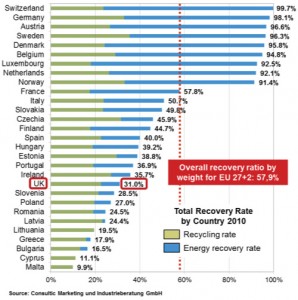
Looking across the EU there are many countries that do a much better job in dealing with Mixed Plastic Waste [MPW] than we do in the UK.
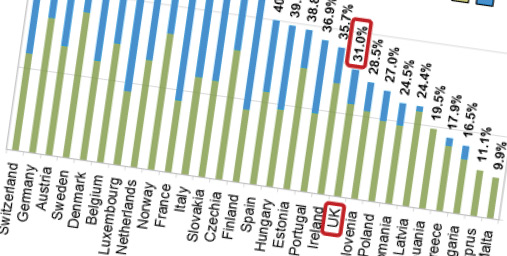
Plastics Europe in their annual survey does a great job of analysing the extent to which plastic is utilised after first use by country. Their data does a lot to dispel the myth that recycling suffers when the focus is on generating energy from MPW. The data clearly shows that the countries that recover the majority of the energy also do better than average in their recycling rate, suggesting that the one compliments the other.
 Should EfW divert mixed plastic from recycling? The answer is no, assuming that the recycling itself is sustainable and that the resources utilised in achieving it are not disproportionate. However, the key word is “mixed”. When plastic is clean and of a single type then recycling is typically possible, but when it is mixed recycling becomes much less technically possible and this is the fraction that in our view be considered as an alternative energy resource. So should material currently going to landfill be diverted to an EfW plant? If in doing this it means virgin fossil fuel remains in the ground then the answer has to be a resounding yes.
This being the case the question becomes: Why do some countries already do this and others do not? Since many do, the technology is evidently not the problem. The differentiator is more to do with efficiency and return on investment. It should be noted that countries that have invested in EfW typically also have district heating systems, allowing the heat produced during the electricity generation to be used efficiently. This makes the EfW plant efficient and contributes to providing a meaningful payback on the capital asset. Countries that do not already have district heating systems installed find that achieving healthy financial returns on the capital involved in large EfW plant is much more difficult to achieve.
The key to increasing the capacity of EfW facilities in countries that do not have district heating may be to make much smaller systems. Small enough to fit within factories, hospitals and district centres etc., where the heat produced during the generation of electricity can be used at its source. This creates very efficient and consequently financially attractive opportunities for MPW.
So, making better use of MPW through EfW should be seen as a friend in the pursuit of environmental sustainability. It is not the enemy of recycling, but a logical partner. It also offers interesting value-add opportunities for smaller scale plants, and those that are appropriately co-located with niche recovery technologies are likely to benefit most. These firms will see higher margins in the energy and fuels space as well as conventional recycling.